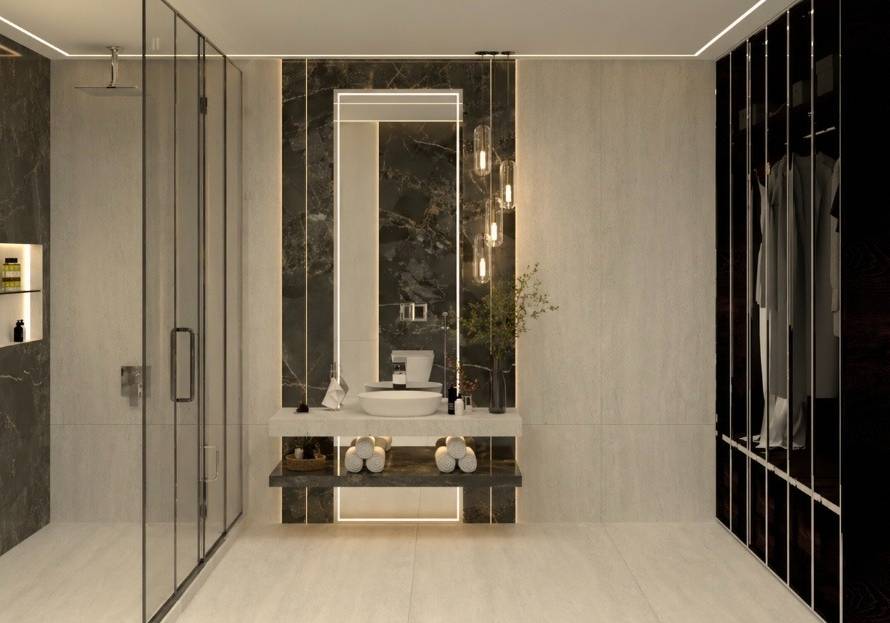
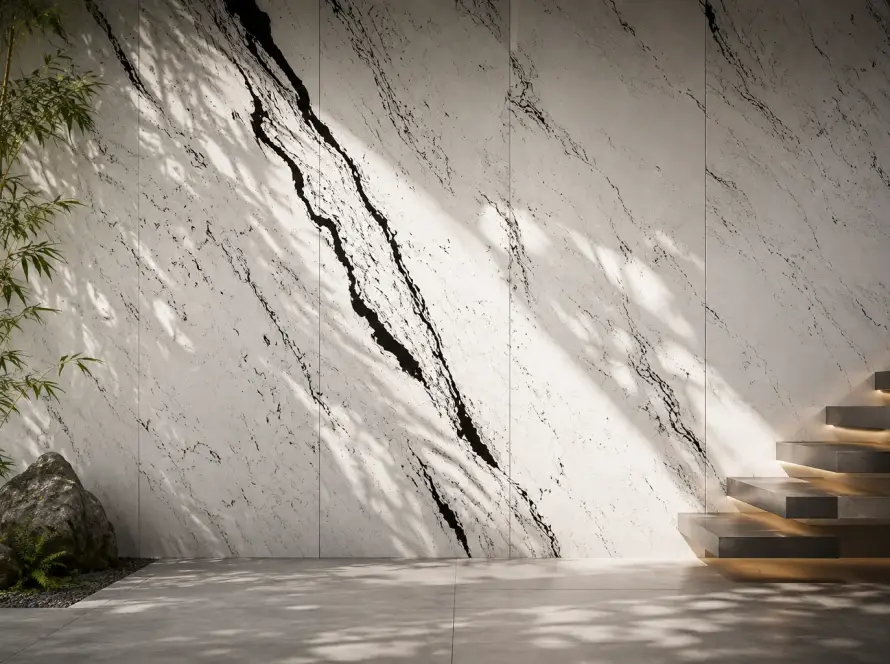
The Dubai tiles market has evolved into a highly segmented industry where origin, manufacturing technology, and design precision all influence purchasing decisions. Within this ecosystem, Chinese tiles in Dubai have gained significant attention because they now sit at the intersection of affordability, advanced production technology, and large-scale architectural capability.
However, choosing the right Chinese tiles is not as simple as comparing prices. The difference between standard products and premium chinese tiles lies in technical specifications, factory standards, and design consistency. In luxury and semi-luxury projects, these differences directly impact durability, installation quality, and long-term appearance.
This guide explains how to evaluate Chinese tiles properly for Dubai interiors without compromising on performance or design quality.
Why Are Chinese Tiles Gaining Demand in Dubai?
The rise of porcelain tiles Dubai sourced from China is driven by one key shift: manufacturing capability.
China is now one of the largest producers of engineered porcelain surfaces globally, using advanced kilns, digital glazing systems, and automated rectification technology. This allows manufacturers to produce tiles that match international standards at scale.
This is why chinese porcelain tiles are now widely used in:
- Residential apartments
- Large villa developments
- Commercial projects
- Hospitality interiors
In many cases, developers choose Chinese products because they allow access to luxury tiles Dubai aesthetics at more controlled budgets.
Step 1: Understand the Difference Between Grades
Not all Chinese tiles are equal. The market typically falls into three broad categories:
1. Entry-Level Tiles
These focus on cost efficiency rather than design precision. They may have:
- Higher shade variation
- Lower rectification accuracy
- Basic surface finishes
2. Mid-Range Tiles
This category represents the most affordable porcelain tiles used in residential projects. They balance cost and durability reasonably well.
3. Premium Tiles
This is where premium Chinese tiles stand out. They include:
- High-definition digital printing
- Rectified edges (minimal grout lines)
- Better PEI ratings for durability
- Improved consistency across batches
This segment is increasingly competing with European imports in modern interiors.
Step 2: Evaluate Technical Performance, Not Just Design
In Dubai’s climate, visual appeal alone is not enough. Tiles must perform under heat, humidity, and heavy usage conditions.
When selecting best chinese tiles Dubai, always evaluate:
- Water absorption rate (ideally ≤0.5%)
- Flexural strength for flooring applications
- Slip resistance rating (especially for bathrooms)
- Surface abrasion resistance (PEI classification)
These technical factors determine whether the tile will last in real-world conditions or degrade over time.
Step 3: Large Formats and Slab Technology
One of the strongest growth areas is Chinese slab tiles.
Large-format production in China has improved significantly, enabling slabs that are used in:
- Kitchen countertops
- Feature walls
- Hotel lobbies
- Luxury bathroom cladding
These modern chinese tiles often replicate marble, stone, and concrete aesthetics while offering more stable production consistency.
Large formats also reduce grout lines, improving visual continuity in modern interiors.
Step 4: Imported Chinese Tiles and Market Positioning
The category of imported Chinese tiles Dubai has shifted perception in recent years.
Previously associated mainly with budget construction, Chinese imports are now part of mid-premium architectural specifications. This change is driven by:
- Advanced automation in production
- Improved surface printing technology
- Better quality control systems
- Global design collaborations
As a result, imported Chinese collections are increasingly used in affordable luxury tiles projects where cost efficiency and visual impact must align.
Step 5: Design Compatibility With Modern Interiors
Modern Dubai interiors rely heavily on minimalism, large surfaces, and natural textures. This is where Chinese manufacturers have significantly improved their design output.
Today’s modern chinese tiles include:
- Marble-look surfaces
- Travertine-inspired textures
- Cement and industrial finishes
- Soft matte stone aesthetics
These designs are now commonly used in villas, apartments, and commercial interiors where luxury tiles Dubai standards are expected but budgets remain controlled.
Step 6: Balancing Cost With Long-Term Value
One of the key advantages of Chinese production is pricing flexibility. However, the goal should not be to select the cheapest option it should be to maximize value.
Well-selected Chinese porcelain can perform similarly to higher-priced imports when:
- Proper installation systems are used
- Substrate preparation is done correctly
- Quality grading is verified before purchase
This is why many developers now use affordable porcelain tiles from trusted Chinese manufacturers in large-scale projects without compromising design outcomes.
Step 7: When Chinese Tiles Are the Right Choice
Chinese tiles are most effective when used in:
- Large residential developments
- Mid to high-end apartment interiors
- Commercial flooring systems
- Budget-optimized luxury villas
They are especially useful when large surface coverage is required without significantly increasing material costs.
In many cases, they serve as a practical alternative to European collections while still maintaining strong visual standards.
Novus Surfaces Perspective
Novus Surfaces reflect how the global tile industry is evolving beyond geography-based perception.
By integrating design language inspired by European aesthetics with global manufacturing capabilities, they position materials within a performance-driven framework rather than origin-based classification.
This approach allows Chinese porcelain tiles and other global materials to be evaluated based on:
- Surface quality
- Technical performance
- Design consistency
- Architectural compatibility
Instead of simply labeling tiles as “Italian” or “Chinese,” the focus shifts toward how they perform in real architectural environments.
Final Thought
Choosing Chinese tiles in Dubai today is about selection intelligence.
From premium chinese tiles to chinese slab tiles, the category now offers strong architectural potential when properly evaluated.
The key is specification, consistency, and application. When these factors are correctly assessed, Chinese tiles can deliver both design impact and practical value in modern Dubai interiors, especially within the growing segment of affordable luxury tiles and performance-driven architectural spaces.