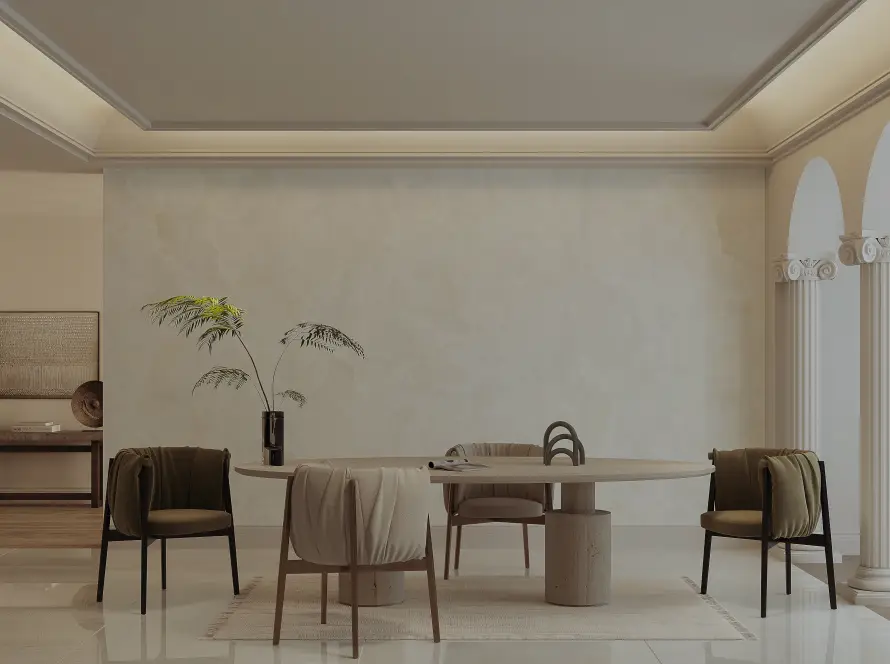
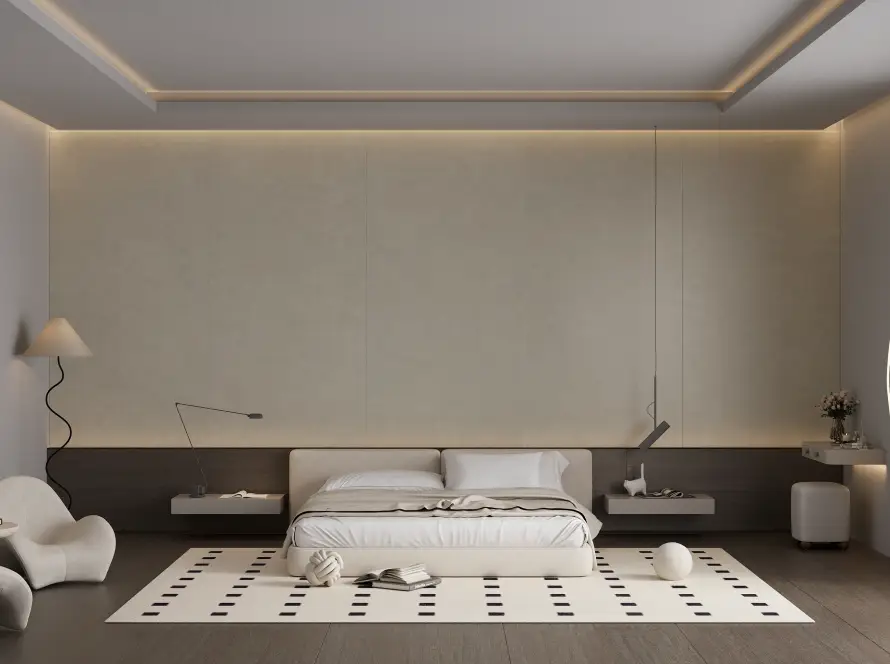
Choosing the wrong tile size is one of the most common and expensive design mistakes in Dubai homes. Unlike color or texture issues, tile size problems are not something you notice immediately. They show up later in how the room feels: too busy, too cramped, visually broken, or simply “not luxurious enough” despite using premium material.
In Dubai interiors are designed for openness, light, and modern luxury, tile proportions directly affect spatial perception. The wrong size can make a large living room feel fragmented or a compact apartment feel even smaller.
But even if the wrong tiles are already installed, there are still smart architectural and visual ways to fix or correct the impact. Let’s break it down in a practical way.
Why Tile Size Matters More Than People Think?
Most homeowners focus on color and finish first, but tile size actually controls how the eye reads space.
Every tile edge creates a visual break. The more breaks you have, the more “segmented” the floor feels. That segmentation directly reduces the perception of space.
That’s why tile size guide Dubai professionals don’t treat sizing as a small detail.
In Dubai homes, where open-plan layouts are common, tile proportion becomes even more critical because floors often extend across multiple zones (living, dining, kitchen, hallway). A wrong tile size affects the entire flow of the home.
Most Common Tile Size Mistakes in Dubai Homes
Many homes in the UAE suffer from predictable sizing errors:
- Small tiles used in large living spaces create unnecessary visual noise. Instead of feeling open, the floor looks busy and segmented.
- On the other hand, overly large tiles in very small rooms can feel forced if the layout is not properly balanced or if cutting patterns are not planned correctly.
A frequent issue is mixing tile sizes without a clear design logic. For example, using different sizes in adjacent rooms without alignment often breaks spatial continuity.
Another common mistake is ignoring furniture scales. A room with heavy furniture and small tiles feels crowded, while large-format flooring can visually stabilize the same space.
Understanding these tile size mistakes Dubai homeowners make is the first step toward correcting them.
How To Fix Small Tiles In A Large Room
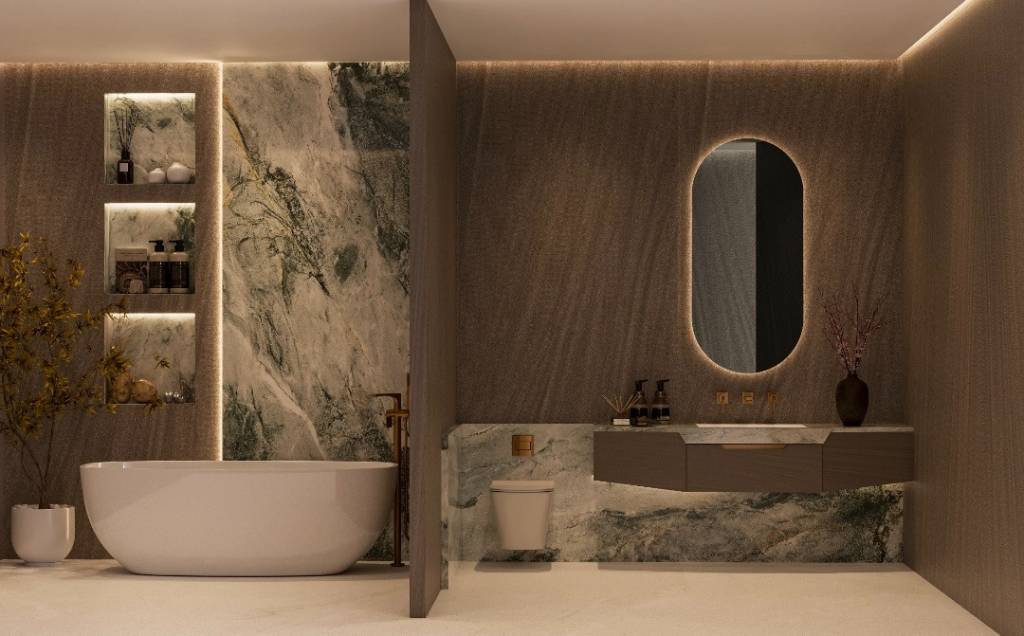
If your living room feels too “busy” because of small tiles, you don’t always need to replace everything immediately. You can visually reduce fragmentation using design corrections:
One approach is to unify the space visually with large rugs that create a continuous base layer, reducing the dominance of grout lines. Another is to use minimal furniture layouts that reduce visual interruption across the floor.
Lighting also plays a role. Soft, evenly distributed lighting reduces harsh shadowing between grout lines, making the floor feel more continuous.
However, in long-term renovations, the most effective solution is upgrading to larger formats tiles or even larger slabs, depending on the room size.
When Large Tiles Feel “Wrong” And How To Fix It
Sometimes the issue is the opposite. Large tiles used in spaces that feel awkward or poorly proportioned.
For example, in narrow rooms or compact bedrooms, large tiles may require excessive cutting, which creates uneven visual balance. The room may start to feel forced or misaligned.
In such cases, the fix is not always a replacement. It’s about improving alignment and visual flow.
Adjusting furniture placement so it aligns with tile joints can reduce visual tension. Adding vertical design elements like curtains or wall paneling also helps rebalance proportions.
In some cases, introducing subtle zoning like a different finish in a specific area can correct visual discomfort caused by oversized flooring.
Choosing The Right Tile Size for Different Spaces
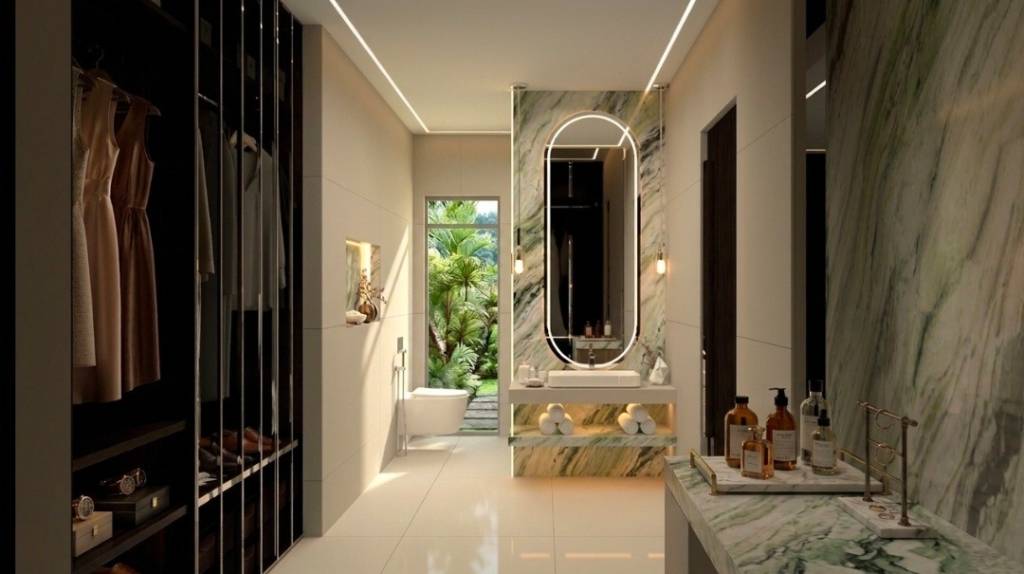
Instead of thinking in terms of “one perfect size,” Dubai designers select tile sizes based on function and scale.
For living rooms, larger formats such as 120×60 porcelain tiles UAE are often preferred because they create seamless, modern surfaces that enhance luxury perception. In bedrooms or compact areas, mid-sized formats like 60×60 tiles often strike the right balance between proportion and practicality.
Hallways benefit from elongated layouts that guide visual flow, while kitchens require careful coordination between cabinets and flooring alignment.
Why Large Format Tiles Are Dominating Modern Dubai Villas
There is a clear shift happening in high-end interiors across the UAE.
More architects are moving toward large surfaces, especially porcelain slabs, because they reduce visual interruption and align with modern minimal aesthetics. Most large format tiles UAE are now widely used in luxury apartments and villas. They create:
- Fewer grout lines
- Stronger spatial continuity
- Cleaner architectural expression
- Better light reflection across surfaces
In large living areas, this effect becomes very noticeable. The room feels calmer and more open simply because the eye isn’t constantly stopping at tile joints.
Fixing Tile Proportion Issues Without Replacing Flooring
Replacing tiles is not always necessary. In many cases, visual correction is possible through design layering. Furniture placement is one of the most effective tools. Aligning sofas, tables, and rugs with tile grid lines reduces visual disruption.
Another method is using consistent color temperature in lighting. Warm or neutral lighting helps smooth out contrast between tiles, especially if grout lines are visible.
Wall treatments also matter. If the floor feels visually heavy due to poor tile sizing, introducing vertical simplicity on walls can restore balance.
These corrections don’t change the material, but they change how the space is perceived.
When Replacement Becomes the Only Real Solution
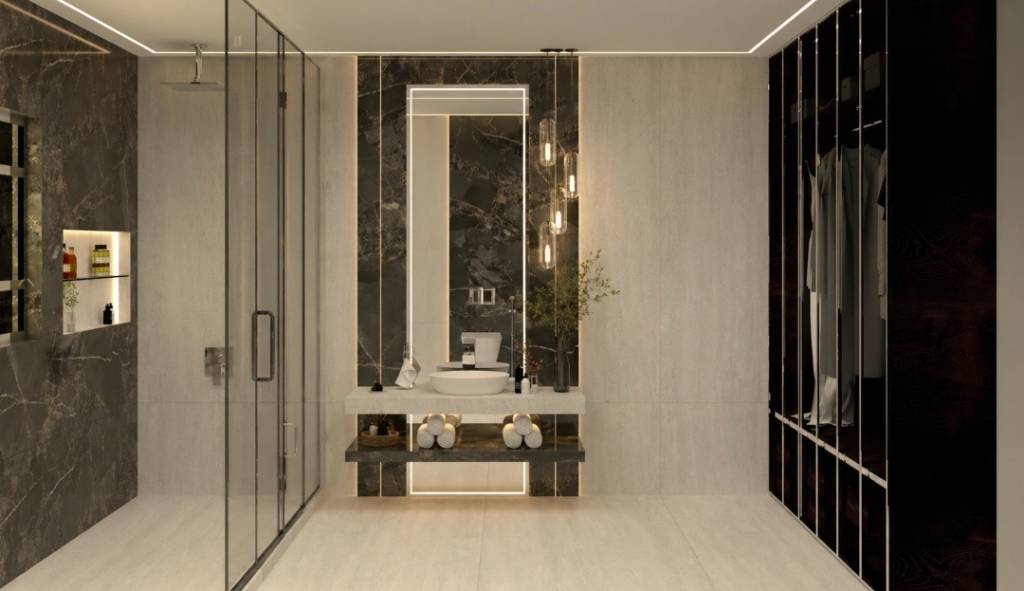
In some cases, design adjustments are not enough.
If the tile size is fundamentally mismatched to the room proportions the space will always feel visually broken. Similarly, poorly installed large tiles in tight layouts can create uneven patterns that no design fix can fully resolve.
In these cases, upgrading to better proportioned surfaces such as best tile size living room UAE recommendations is the most effective long-term solution.
Why Porcelain Slab Sizes Are Changing Modern Design Standards
One of the biggest shifts in Dubai interior design is the adoption of slab-based flooring.
Instead of traditional tile grids, architects are increasingly using continuous porcelain surfaces that behave more like architectural stone sheets than segmented tiles.
These porcelain slab size Dubai systems allow designers to:
- Minimize joints almost completely
- Create uninterrupted flooring across large spaces
- Achieve a more architectural, monolithic look
This approach solves many of the traditional tile sizing issues by removing fragmentation entirely.
The Novus Approach To Tile Proportion And Spatial Balance
At Novus Surfaces, tile sizing is treated as part of architectural design. The focus is not only on producing beautiful porcelain surfaces, but on ensuring those surfaces work correctly across different spatial scales. Each collection is designed with consideration for:
- Proportion balance in small and large rooms
- Visual continuity across connected spaces
- Compatibility with modern Dubai layouts
- Slab and tile formats suitable for real architectural use
This helps homeowners and designers avoid common sizing mistakes that affect long-term spatial experience. Instead of forcing a single format into every space, Novus collections are designed to adapt intelligently to different room proportions.
To Sum Up
Fixing tile size issues is a design correction.
In Dubai homes, where architecture is built around openness and visual flow, flooring has a direct impact on how space is experienced. If you are dealing with overly small tiles, incorrectly scaled large formats, or inconsistent layouts, the solution always comes back to one principle:
When proportions are right, even a modest apartment feels more open. When they are wrong, even a luxury villa feels visually constrained.
That is the difference tile sizing makes. If you want to elevate your space then get in touch with Novus Surfaces now.