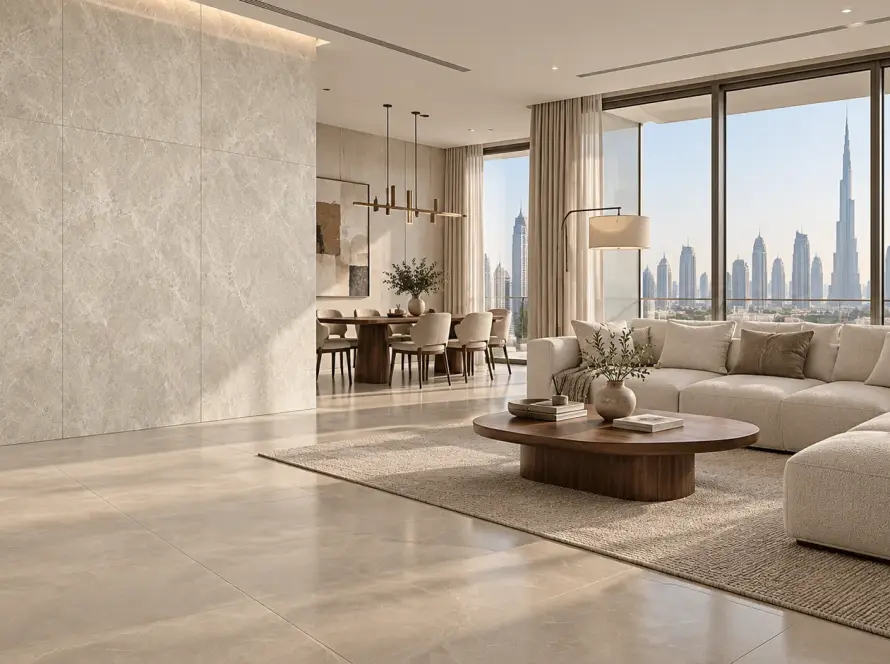
Choosing the right surface material in Dubai is a performance decision. Between extreme heat, humidity variations, and high-traffic luxury environments, the material you select has to perform structurally while still carrying strong visual identity. This is exactly why demand for porcelain tiles in Dubai has shifted from basic residential use to high-end architectural applications.
But most buyers still make the mistake of choosing tiles based only on appearance. In luxury interiors, that approach fails over time. The right selection requires understanding material composition, technical ratings, installation behavior, and design compatibility.
This guide breaks it down in a practical way so you can make decisions like an architect, not just a buyer.
Why Porcelain Has Become the Default Luxury Material in Dubai?
The rise of luxury porcelain tiles Dubai is a material advantage.
Porcelain is fired at temperatures above 1200°C, which creates a dense, low-porosity structure. This is why its water absorption rate is typically less than 0.5%, making it significantly more stable than ceramic or natural stone in humid or high-temperature environments.
In Dubai interiors, this matters because:
- Air-conditioned interiors create thermal cycling stress
- Outdoor-to-indoor transitions are common in villas
- Polished finishes must maintain reflectivity without degradation
This is also why modern porcelain tiles are now used in both residential and commercial architectural projects, not just decorative spaces.
Unlike older materials, porcelain does not rely on surface coating for durability. The strength is inherent in the body composition itself.
Step 1: Match the Tile Type With Its Structural Use
Most selection mistakes happen when wall-grade material is used on floors or vice versa.
Flooring Applications
For load-bearing areas, porcelain flooring Dubai products are engineered with higher breaking strength (often exceeding 1300–1500 N depending on grade). These are suitable for living areas, hotel lobbies, and retail environments where constant foot traffic occurs.
Slip resistance rating (R9–R11) should always be checked for safety, especially in polished finishes.
Wall Applications
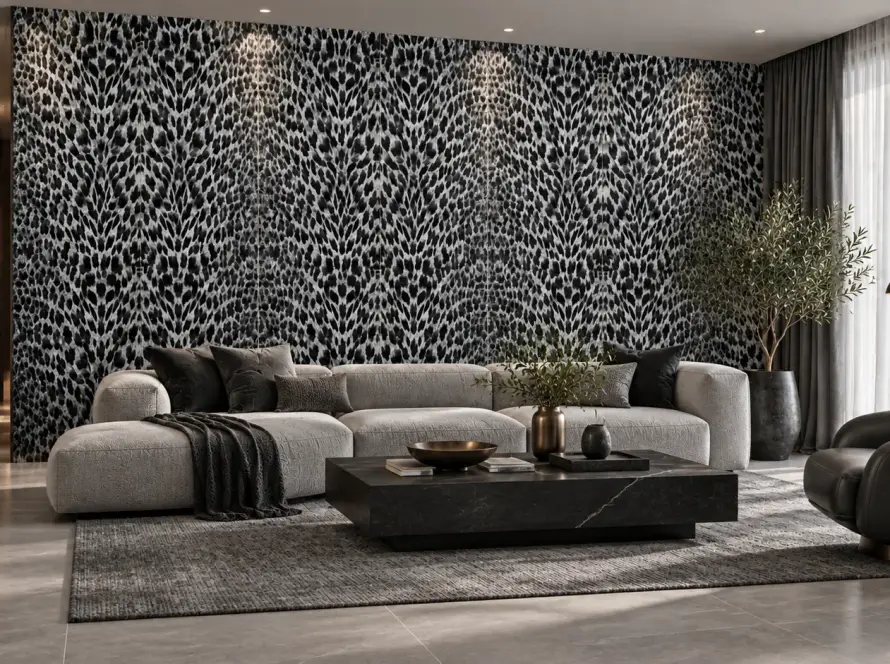
Porcelain wall tiles Dubai are typically lighter in structure and designed for vertical load only. These allow more flexibility in design textures, including marble veining, fabric finishes, and stone replicas.
Using wall tiles on floors is one of the most common installation failures seen in poorly executed interiors.
Step 2: Understand Large-Format Technology Before Choosing
One of the biggest shifts in Dubai’s luxury segment is the move toward large porcelain slabs.
These slabs can go up to 1200×2400 mm or even larger, depending on manufacturer capabilities. The advantage is structural continuity.
Fewer joints mean:
- Lower grout maintenance
- Reduced dirt accumulation
- Higher visual continuity
- Better perception of space
This is why porcelain slab tiles Dubai are widely used in luxury kitchens, hotel bathrooms, and feature walls.
However, slab installation requires specialized handling:
- Vacuum suction lifting tools
- Flatness tolerance control (≤2 mm deviation is typical)
- Epoxy-based adhesive systems
- Leveling systems to avoid lippage
This is a precision-based system.
Step 3: Evaluate Material Origin and Design Calibration
Not all porcelain is manufactured with the same quality standards.
Italian porcelain tiles Dubai collections are often preferred because of their:
- High-definition digital glazing technology
- Advanced inkjet surface printing
- Consistent rectification standards (edge precision)
Rectified edges are critical because they allow minimal grout lines (1.5–2 mm), which is essential for luxury interior aesthetics.
In contrast, lower-grade tiles often have size variation tolerances above acceptable architectural limits, leading to uneven finishes after installation.
Step 4: Balance Aesthetics With Technical Performance
Luxury interiors are are functional systems. When selecting premium tiles Dubai, professionals evaluate:
- PEI rating (abrasion resistance for flooring)
- Water absorption percentage
- Flexural strength
- Surface slip resistance
- Thermal stability
For example, a polished marble-look tile may look premium but require higher maintenance in high-traffic areas. In contrast, matte or structured finishes often perform better long-term while still maintaining luxury appeal.
This is why architects often combine polished feature zones with matte functional flooring in the same project.
Step 5: Luxury Does Not Always Mean Expensive
The market has shifted significantly. You no longer need ultra-premium imported collections to achieve a high-end result.
Today, affordable luxury tiles Dubai options exist that replicate Italian marble, travertine, and natural stone aesthetics using advanced digital printing systems.
The key difference lies in:
- Print resolution density
- Surface glaze layering
- Calibration accuracy
- Edge rectification quality
A well-selected mid-range porcelain tile can visually outperform a poorly chosen expensive slab if the design alignment is correct.
Step 6: Choose Based on Interior Context, Not Catalog Appeal
This is where most decisions fail.
A tile that looks premium in a showroom may not work in your lighting environment, room size, or spatial geometry.
A simple selection logic used by designers:
- Small spaces → lighter tones, low-contrast veining
- Large villas → bold marble patterns or large slabs
- Commercial interiors → neutral industrial textures
- Bathrooms → anti-slip textured finishes
This approach ensures best porcelain tiles Dubai selections actually perform in real environments, not just visual samples.
To Sum Up
Selecting the right surface is all about aligning material science with architectural intent.
When you understand density, rectification, slip ratings, slab behavior, and installation requirements, your decisions become significantly more precise.
That is how high-end interiors in Dubai are actually built. Whether you are working with Italian porcelain tiles Dubai, exploring porcelain slab tiles Dubai, or evaluating modern porcelain tiles, the goal remains the same: long-term performance with timeless visual control.